Local guide to the Toubkal Refuge and Les Mouflons base camp, including the route from Imlil, rooms, food, showers, altitude, summit morning, packing tips and booking advice.
The Toubkal Refuge is where the Mount Toubkal climb starts to feel real. You leave Imlil in the morning with villages, walnut trees, and mule tracks around you, then slowly the valley becomes rockier, colder, and quieter. By the time you reach the refuge area at around 3,200 meters, most hikers understand that summit day is no longer an idea on a booking page. It is tomorrow morning, before sunrise.
For many travelers joining a 2-day Toubkal trek, the refuge night is the part they know least about. They ask us: Is it comfortable? Do I need a sleeping bag? Are there showers? Is the food okay? Will I sleep at altitude? What time do we start for the summit?
This guide answers those questions from our local experience guiding hikers between Imlil, Sidi Chamharouch, the Toubkal Refuge, Les Mouflons, and the summit of Mount Toubkal.
Summary of the article
- Quick Answer: What Is the Toubkal Refuge?
- Where Is the Toubkal Refuge?
- Toubkal Refuge or Les Mouflons: What Is the Difference?
- The Walk from Imlil to the Refuge
- What Are the Rooms Like?
Jump to the section that interests you most.
Quick Answer: What Is the Toubkal Refuge?
The Toubkal Refuge is the mountain base camp used by most hikers before climbing Mount Toubkal. It sits high above Imlil in the High Atlas Mountains, close to the normal summit route. Most people sleep here for one night before starting the summit climb early the next morning.
The refuge area is not a hotel. It is simple mountain accommodation with dormitory rooms, shared spaces, meals, toilets, and a busy trekking atmosphere. In high season it can feel lively and crowded. In winter it can feel cold, serious, and very mountain-like.
For most hikers, it does exactly what it needs to do: gives you a place to eat, rest, prepare your headlamp and warm layers, and start the summit climb from a good altitude.
Where Is the Toubkal Refuge?
The refuge is above Imlil, on the standard route to Mount Toubkal. The usual approach starts from Imlil at around 1,740 meters, passes through Aremd or nearby trails, continues toward Sidi Chamharouch, and climbs gradually into the upper valley.
Approximate route details:
- Start: Imlil Valley
- Main lunch area: around Sidi Chamharouch or nearby trail stops
- End of day 1: Toubkal Refuge area, around 3,200 meters
- Walking time from Imlil: usually 5 to 6 hours
- Route type: rocky mountain trail, steady uphill, no technical climbing in normal conditions
The route is straightforward for local guides, but the altitude gain is real. You climb roughly 1,400 meters from Imlil to the refuge. That is why the last part of day 1 often feels slower, even for fit hikers.
Toubkal Refuge or Les Mouflons: What Is the Difference?
Many hikers hear different names: Toubkal Refuge, Refuge du Toubkal, CAF Refuge, Neltner Refuge, Les Mouflons, or Toubkal base camp. In practice, travelers often use these names to describe the same high refuge area below Mount Toubkal.
Les Mouflons is one of the best-known refuge buildings in the area. The older refuge is also widely known among trekkers and guides. Which building you sleep in can depend on availability, season, group size, booking arrangements, and local conditions.
What matters most is not the name on the door. What matters is that your guide has arranged your place, meals are organized, and you know what to expect from a shared mountain refuge.
The Walk from Imlil to the Refuge
Day 1 begins gently compared with summit day. From Imlil, the trail passes village paths and mule tracks before the valley opens toward the higher mountain route. In the morning, hikers are usually excited and fresh. The pace should stay calm from the beginning, because walking too fast early in the day can make the final climb to the refuge feel harder.
The trail normally passes near Sidi Chamharouch, a well-known stop on the Toubkal route. Many groups eat lunch around this part of the valley before continuing higher. After lunch, the landscape becomes more open and rocky. The villages are behind you, the air feels thinner, and the refuge slowly appears at the head of the valley.
This is when many people become quiet. Not because something is wrong, but because the body is working, the altitude is higher, and everyone starts thinking about the summit.
What Are the Rooms Like?
Rooms at the Toubkal Refuge are usually shared dormitories. Expect a simple mountain setup, not private hotel comfort. Depending on the season and how busy the refuge is, you may share with hikers from different groups and different countries.
You can usually expect:
- Shared dormitory sleeping areas
- Basic mattresses or bunks
- Blankets in many cases, depending on the refuge and arrangement
- Shared toilets
- Dining areas with other trekking groups
- A busy atmosphere in peak season
If you are a light sleeper, bring earplugs. People wake at different times for summit attempts, bags are moved early, headlamps switch on, and boots start walking before dawn. This is part of the refuge experience, but it can surprise people who expected a quiet guesthouse.
Do You Need a Sleeping Bag?
For many standard treks, a sleeping liner is enough if blankets are available. Some hikers prefer a light sleeping bag for comfort and hygiene. In winter or colder conditions, a warmer sleeping bag can be useful.
Our advice:
- Summer and warm shoulder season: sleeping liner is usually enough for many hikers
- Spring and autumn: liner plus warm layers is wise
- Winter: ask before departure because colder conditions may require a warmer sleep system
- If you are sensitive to cold: bring your own lightweight sleeping bag or ask about rental options
If you are missing a liner, sleeping bag, poles, warm jacket, headlamp, gloves, or rain layer, check our Imlil gear shop before the trek.
Food at the Toubkal Refuge
Food is usually simple, warm, and filling. The exact meals depend on your trek arrangement, the cook, the season, and what is available, but hikers can often expect Moroccan-style mountain food such as soup, tagine, couscous, pasta, rice, bread, tea, coffee, eggs, jam, or similar trek meals.
The most important thing is to eat even if your appetite is lower at altitude. Many hikers reach the refuge tired and only want to sleep, but summit morning is easier when you have eaten well the night before.
Bring a few snacks you personally like for summit day. Dates, nuts, chocolate, energy bars, sweets, or salty snacks can help when appetite is low and the morning is cold.
Showers, Toilets and Comfort
This is where expectations matter. The Toubkal Refuge is mountain accommodation at altitude. Facilities are basic and can be busy.
Toilets are shared. Hot showers may not always be available or may depend on the refuge, season, water, timing, and crowding. Internet or phone signal can be weak or unreliable. Charging may be limited, so a small power bank is useful.
Bring:
- Toilet paper or tissues
- Hand sanitizer
- Wet wipes
- Small travel towel if you want one
- Power bank
- Earplugs
- Headlamp
The less you expect luxury, the more you enjoy the refuge for what it is: a practical mountain base before a beautiful summit.
Altitude at the Refuge
Sleeping around 3,200 meters is a new experience for many hikers. Some people sleep normally. Others wake often, feel a light headache, breathe faster, or lose appetite. Mild discomfort can happen, but it should be watched carefully.
Good habits at the refuge:
- Drink water slowly and regularly
- Eat dinner even if you are not very hungry
- Keep warm in the evening
- Avoid rushing around with your backpack
- Tell your guide early if you feel headache, nausea, dizziness, chest pain, or unusual weakness
Altitude affects people differently. Fitness helps with walking, but it does not make anyone immune to altitude symptoms. A good guide watches the group and makes decisions based on safety, not ego.
Summit Morning from the Refuge
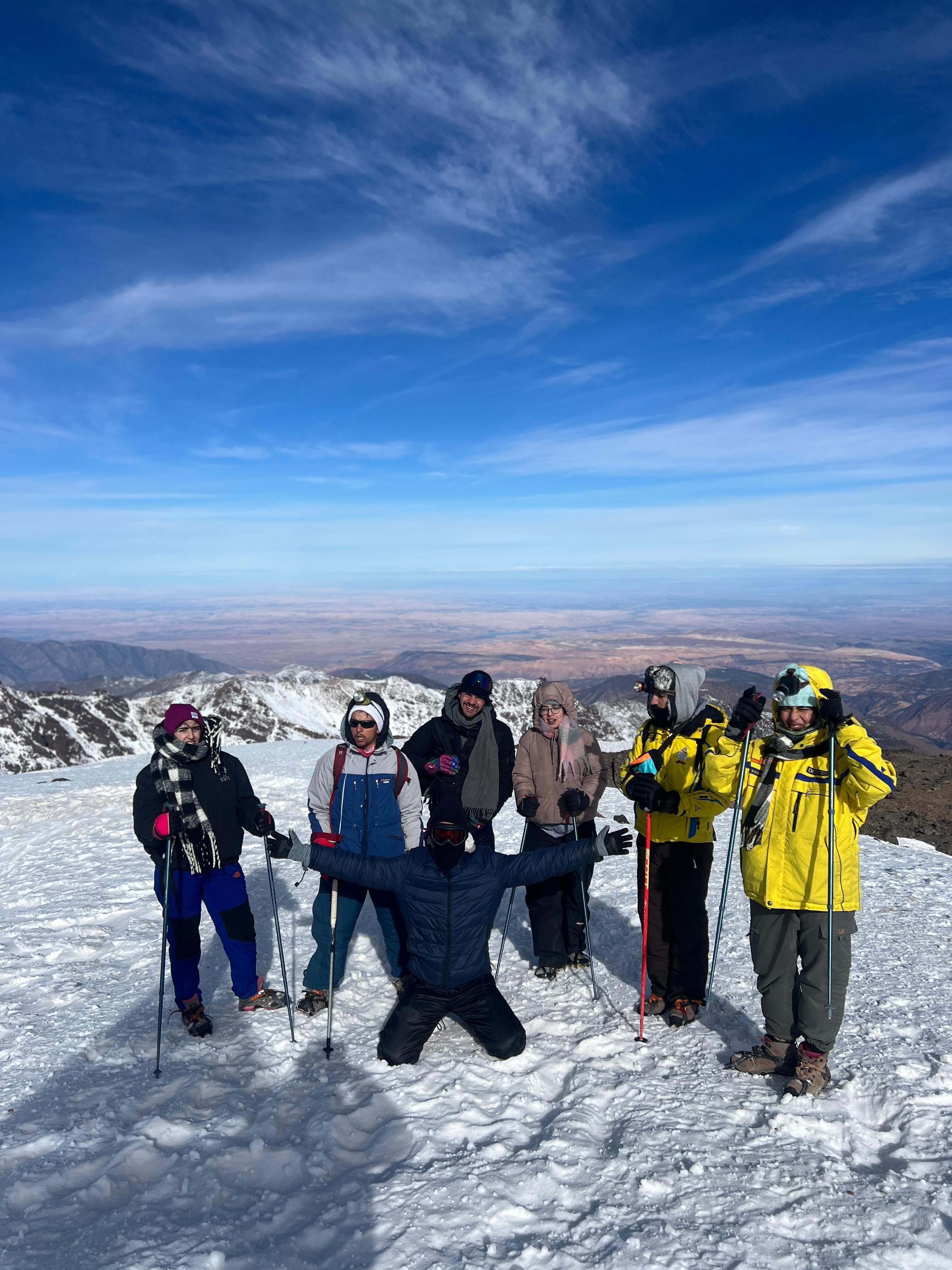
Most summit attempts start very early, often around 4:00 am, depending on season, weather, group pace, and guide decision. You leave the refuge in the dark with a headlamp, warm layers, gloves, and water. The first minutes can feel cold and sleepy, but the body slowly wakes up.
The summit is only a few kilometers from the refuge, but it is steep, high, and mentally demanding. Many hikers reach the top in around 3 to 4 hours from the refuge in normal conditions. The pace should feel steady, not rushed.
Before sleeping, prepare:
- Headlamp
- Warm jacket
- Gloves and hat
- Water
- Snacks
- Sunglasses for after sunrise
- Sunscreen
- Trekking poles if using them
- Camera or phone
Do not leave summit preparation until morning. At 4:00 am, in a shared dormitory, with cold fingers and other hikers moving around, simple things suddenly become annoying to find.
What Happens After the Summit?
After reaching the summit of Mount Toubkal, most groups take photos, enjoy the view, eat a snack, and start descending. The descent first returns to the refuge. Some hikers feel much better after the summit because the pressure is gone. Others find the descent hard on the knees because the trail is rocky and long.
For the 2-day Toubkal trek, the same day usually continues from the refuge all the way back to Imlil. This is why summit day is long. You climb, descend to the refuge, rest briefly, then keep going down the valley.
If you prefer a slower experience, the 3-day Toubkal hike gives more breathing room and is often better for first-time high-altitude hikers.
Camping Near the Refuge
In some seasons and arrangements, camping near the refuge area can be possible. Camping can feel quieter than sleeping in a crowded dormitory, but it depends on weather, equipment, local rules, group setup, and your trek package.
Camping is not automatically easier. Cold nights, wind, and altitude can make tent sleep less comfortable for some people. For others, it is a beautiful mountain experience. If you want this option, ask before booking so the right equipment and logistics can be arranged.
What to Pack Specifically for Refuge Night
You do not need to overpack, but these items make refuge night and summit morning much smoother:
- Sleeping liner
- Earplugs
- Headlamp with good battery
- Warm layer for the evening
- Gloves and hat
- Dry socks
- Toilet paper
- Hand sanitizer
- Wet wipes
- Small power bank
- Personal medication
- Snacks for summit morning
- Cash for small extras if needed
For the full equipment list, read our Mount Toubkal packing list.
Winter at the Toubkal Refuge
Winter changes the whole feeling of the refuge. Snow, ice, wind, colder dormitories, and more serious summit conditions make the climb harder. From around December to April, and sometimes outside those months depending on the year, crampons, ice axe, waterproof boots, and warmer clothing may be needed.
The refuge becomes more than a sleeping place in winter. It is where guides check conditions, assess the group, prepare equipment, and decide whether the summit attempt is safe.
If you are thinking about a cold-season climb, read our Mount Toubkal winter trek guide before booking.
Local Guide Advice
The hikers who enjoy the refuge most are the ones who accept it as part of the mountain. They arrive, change into dry layers, drink tea, eat, prepare their summit bag, and rest. They do not waste energy complaining that the refuge is not a hotel.
My advice is simple: arrive with patience. Talk with your guide. Keep your warm clothes close. Drink water. Eat dinner. Pack your summit items before sleep. Then try to rest, even if you do not sleep deeply.
The refuge night is not the luxury part of Toubkal. It is the doorway to the summit.
Is the Toubkal Refuge Worth It?
Yes. For most hikers, sleeping at the Toubkal Refuge is the practical and memorable way to climb Mount Toubkal. It places you close enough to the summit for an early start, gives you a shared mountain atmosphere, and turns the trek into a real High Atlas experience.
If you want the classic route with transport, guide, meals, refuge night, and summit support arranged from Imlil, start with our 2-day Mount Toubkal trek from Marrakech. If you want a gentler pace with more time in the mountains, compare it with the 3-day Toubkal hike.
Either way, the refuge is part of the story. It is where strangers become a summit team, where the mountain feels close, and where the quiet thought arrives: tomorrow, we climb.
Put this guide into practice
Guided treks related to this article
Written and reviewed by
Atlas Toubkal Trek Team
Atlas Toubkal Trek is based in Imlil, where the main Mount Toubkal and High Atlas routes begin. Our guides combine local trail knowledge with the practical questions hikers ask before and during their trek.
Meet the local teamTopics
Continue Reading
Explore more articles in Mount Toubkal Guides

How to Climb Mount Toubkal: Local Guide to the Route, Difficulty, Cost and Summit
Learn how to climb Mount Toubkal from Imlil with local guide advice on the 2-day route, difficulty, altitude, refuge, packing, cost, best season and summit day.
Can You Climb Mount Toubkal Without a Guide? 2026 Rules Explained
Can you climb Mount Toubkal without a guide in 2026? A local guide from Imlil explains the current Toubkal guide rule, checkpoints, safety, and how to book.
Climbing Mount Toubkal for the First Time: A Local Guide's Practical Advice
A practical first-time guide to climbing Mount Toubkal in Morocco, with local advice on fitness, altitude, gear, pacing, summit day, and choosing the right 2-day or 3-day Toubkal trek.